
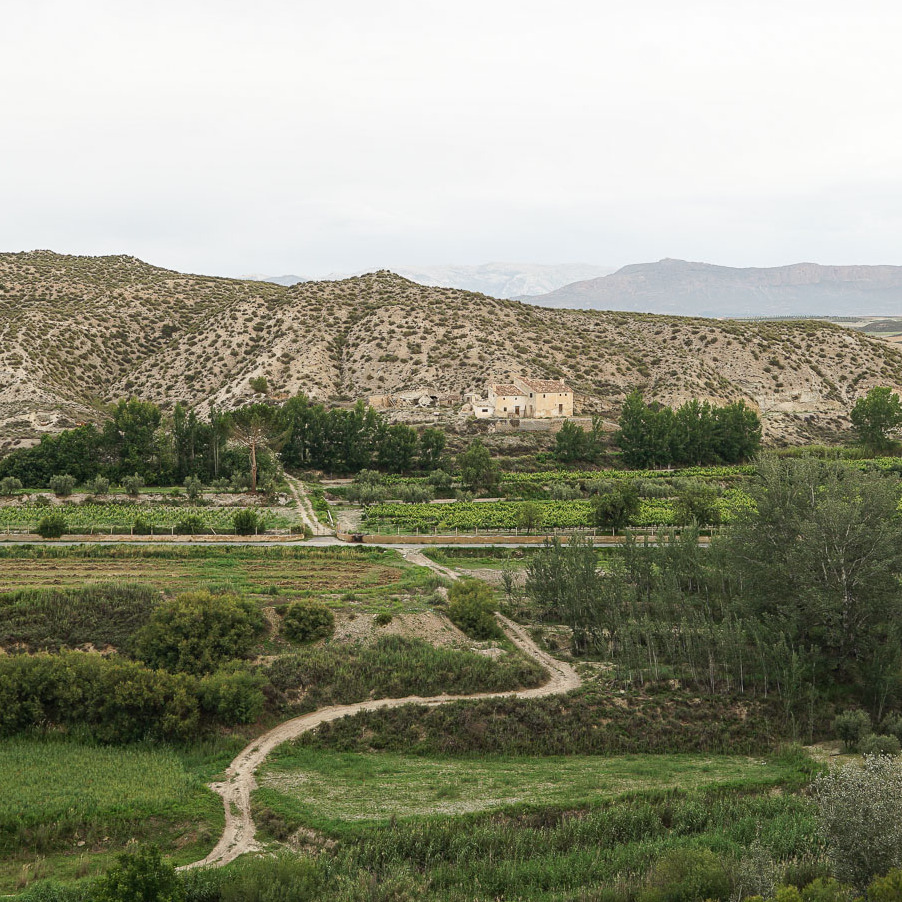
In the era of rural depopulation, discussing good examples of repopulation is not only important, but necessary. The Altiplano de Granada, a region that includes municipalities like Galera, Orce, and Huéscar, is becoming an interesting social laboratory where people from over 30 nationalities coexist. This human mosaic offers valuable clues about how to revitalize villages through diversity and integration.
Who’s coming and why?
Not all new residents arrive for the same reasons, and this is one of the region's strengths. Broadly speaking, we can distinguish two main profiles:
Those who migrate for work and economic necessity, mostly from Latin America, Africa, and Eastern Europe.
Those looking for a retreat or rest environment, primarily retirees from the UK, France, Germany, and Italy.
The former find opportunities that are scarce in their home countries, while the latter value tranquility, nature, and the more affordable cost of living. This classification is useful for those designing public policies and helps us better understand rural migration dynamics.
A methodology that listens to those who arrive
The analysis work carried out in the region has combined surveys and interviews to learn firsthand about the motivations, obstacles, and expectations of new residents. Although there were difficulties getting responses from certain groups (such as Latin Americans or Africans), qualitative interviews helped complete the human portrait of this rural migration.
Stories like that of Marisol Díaz, a Colombian resident in Galera, give a face to this phenomenon. She left Medellín to work as a caregiver for the elderly, aiming to improve her children’s lives and fulfill her dreams between two continents. Her testimony reflects both the challenges and determination of many migrant women who sustain rural life with their work.
What do the numbers say?
Although there is still much to learn, the figures suggest that the repopulation trend is stabilizing, with new families arriving every month. Rural municipalities have started receiving more help from government programs aimed at creating favorable conditions for family settlement, including employment support, housing policies, and improving rural infrastructure.
On the other hand, there has been a significant loss of population from Romania and Bulgaria, which points to the need for strategies to encourage them to take root.
For their part, Europeans who come to retire -especially British- have maintained a strong presence in municipalities such as Galera, although with some volatility in the rest of the region. Even so, their life projects also contribute to revitalize the local economy and social fabric.
In summary, the Altiplano of Granada is a living example that rural repopulation is possible if managed with intelligence, sensitivity and political will. Understanding the motivations of those who arrive is the first step to building more diverse, resilient and future-proof rural communities.
 EN
EN  ES
ES